
Understanding REST API Principles
Welcome back! You've now grasped the fundamental language of the web (HTTP) and understood the intricate journey a web request takes from your browser to a server and back. With this knowledge, you're perfectly prepared to dive into a specific, incredibly popular architectural style for building APIs: REST.
Think of HTTP as the fundamental language spoken on the web. Now, REST is like the widely accepted grammar, etiquette, or set of design principles for how to speak that language elegantly and consistently when designing APIs. Most modern web APIs you'll encounter are "RESTful APIs".
Understanding REST principles is absolutely essential for writing effective and maintainable API tests. Let's explore its core concepts.
What is REST (and RESTful APIs)
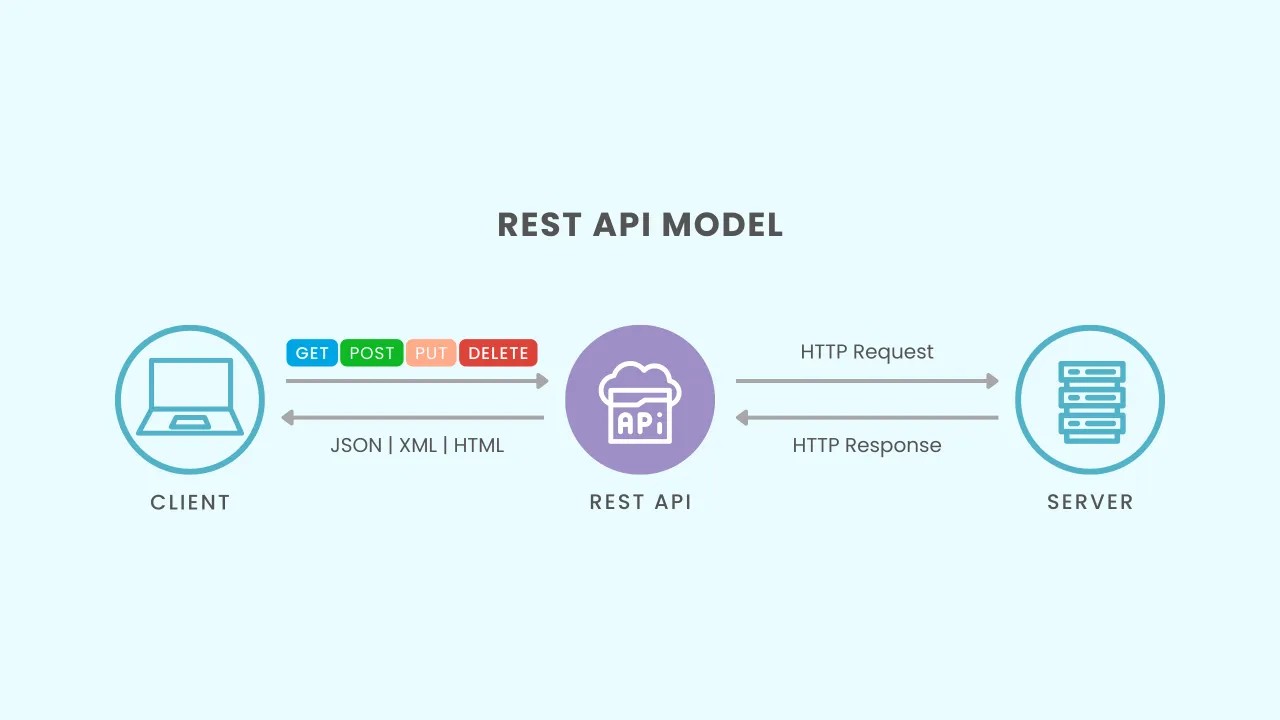
REST (Representational State Transfer) is an architectural style that defines a set of constraints and principles for designing distributed systems and web services. Unlike protocols such as HTTP or SOAP, REST is not a technical specification but rather a design philosophy that leverages existing web standards to create scalable, maintainable, and interoperable applications. APIs that conform to REST architectural constraints are called RESTful APIs.
REST was introduced by Roy Fielding in his doctoral dissertation in 2000, where he outlined the architectural principles that made the World Wide Web so successful and scalable. By applying these same principles to API design, REST has become the dominant architectural style for modern web services, powering everything from social media platforms to enterprise applications and microservices architectures.
The Foundation: Resources as First-Class Citizens
The fundamental concept underlying REST is that everything in the system is modeled as a resource. A resource represents any piece of information, data, or functionality that can be uniquely identified and manipulated through the API. This resource-centric approach transforms how we think about system design, moving away from action-oriented RPC (Remote Procedure Call) patterns toward a more intuitive, web-native approach.
Resources are not limited to database records or static data. They can represent:
Data Entities
- Individual objects:
/users/123(a specific user). - Collections:
/users(all users in the system). - Nested relationships:
/users/123/orders(orders belonging to user 123).
Business Processes
- Transactions:
/payments/abc-456(a specific payment transaction). - Reports:
/reports/monthly-sales(a generated sales report). - Search results:
/search?q=laptops(products matching search criteria).
System Resources
- Configuration settings:
/config/database(database configuration). - Health status:
/health(system health information). - Metrics:
/metrics/performance(system performance data).
Why REST Became the Web API Standard
REST's widespread adoption stems from several key advantages that align perfectly with modern software development needs:
- Simplicity and Familiarity: REST builds upon HTTP, the protocol that powers the web. Developers already understand HTTP methods, status codes, and URLs, making REST APIs intuitive to design, implement, and consume. This familiarity reduces the learning curve and accelerates development.
- Scalability by Design: REST's stateless nature and caching capabilities enable horizontal scaling. Applications can distribute load across multiple servers without complex session management, and intermediate caches can reduce server load by serving frequently requested resources.
- Platform Independence: RESTful APIs work across different programming languages, frameworks, and platforms. A REST API built with Java can be consumed by JavaScript frontends, mobile applications, or Python scripts without requiring specialized libraries or adapters.
- Tooling Ecosystem: The REST ecosystem includes powerful development and testing tools like Postman, Swagger/OpenAPI, curl, and browser developer tools. This rich tooling landscape makes REST APIs easier to develop, document, test, and debug.
- Web-Native Integration: REST APIs integrate seamlessly with web technologies, making them ideal for modern web applications, mobile apps, and cloud-native architectures. They leverage existing web infrastructure like CDNs, load balancers, and proxies.
The Resource-URL-Method Scheme
REST's elegance lies in its simple yet powerful interaction model. Every API operation is expressed through the combination of three elements:
- Resource Identity (URL): A unique identifier that specifies what you're working with.
- HTTP Method (Verb): The action you want to perform on that resource.
- Representation (Data Format): How the resource is represented in the request/response.
For example:
GET /users: Read (Retrieve) a collection of all user resources.GET /api/v1/users/{id}: Retrieve a specific user resource by its ID.POST /api/v1/users: Create a new user resource using the provided data. The data for the new user is typically sent in the request body.PUT /api/v1/users/{id}: Update or replace an existing user resource completely at a specific ID. The full, updated user data is sent in the request body.DELETE /api/v1/users/{id}: Delete a specific user resource by its ID.
RESTful URLs are Nouns, Not Verbs!
A fundamental principle of good RESTful design is that your URLs (the resource identifiers) should represent resources (nouns), not actions (verbs). So, it's GET /users (to get the collection of users), not GET /getAllUsers. The HTTP method (GET, POST, PUT, DELETE) is the verb that describes the operation you want to perform on that noun (the resource).
REST in the Modern API Landscape
Today's software landscape – characterized by microservices, cloud computing, and mobile applications – has validated REST's design principles. RESTful APIs serve as the communication backbone for:
- Microservices architectures where services need to communicate across network boundaries.
- Mobile applications that require efficient, cacheable data access over unreliable networks.
- Single-page applications (SPAs) that dynamically load data without full page refreshes.
- Third-party integrations where different organizations need standardized ways to exchange data.
- Cloud platforms that expose infrastructure and services through programmatic interfaces.
Understanding REST is essential for modern test automation because many applications expose their functionality through RESTful APIs. By aligning with standard web architecture, REST enables automated tests to interact with systems in a consistent, predictable way – whether you're verifying data, simulating workflows, or validating error handling. Its statelessness, structured responses, and reliance on HTTP methods make it ideal for scalable and maintainable test suites that can run across environments and evolve with your application.
The Core Principles of REST
RESTful APIs are designed according to several architectural constraints that define how they should behave and interact with clients. Understanding these principles is essential for developers and testers alike, as they provide the foundation for predicting API behavior, designing effective test cases, and troubleshooting issues. These constraints work together to create APIs that are scalable, reliable, and maintainable across different systems and use cases.
Client-Server Architecture
This fundamental principle establishes a clear separation of concerns between the client and server components of a web application. The client, which can be a web browser, mobile application, or automated test script, is responsible for the user interface and user experience logic. Meanwhile, the server handles data storage, business logic, and processing operations. This separation allows both sides to evolve independently without affecting each other's functionality. For example, your team can update your mobile app's interface without changing the server code, or upgrade your server's database without requiring client updates. This independence promotes flexibility in development cycles, enables teams to work on different components simultaneously, and supports better scalability as each side can be optimized for its specific role.
Statelessness
Statelessness is one of the most crucial principles of REST architecture and has significant implications for API testing and reliability. This constraint requires that each request from the client to the server must be completely self-contained, including all the information necessary for the server to understand and process that request successfully. The server cannot rely on any stored context, session data, or memory of previous interactions with that client. Each request is treated as an entirely independent transaction, as if it were the first time the client and server had ever communicated. This means that authentication tokens, user preferences, and any other contextual information must be explicitly included in every request. While this might seem inefficient at first glance, statelessness provides tremendous benefits for testing, debugging, and scaling, as it eliminates complex state management issues and makes each API call predictable and reproducible.
Cacheability
Cacheability in REST APIs involves clearly communicating to clients whether and how they can store and reuse server responses to improve performance and reduce unnecessary network traffic. Responses can be explicitly cacheable when they include specific HTTP headers like Cache-Control, Expires, or ETag that provide detailed instructions about storage duration, validation requirements, and invalidation conditions. Alternatively, responses can be implicitly cacheable based on standard HTTP conventions, such as successful GET requests that don't include cache-prevention headers. Effective caching strategies significantly reduce server load by preventing redundant requests for unchanged data, improve user experience through faster response times, and enhance overall system scalability. However, improper caching can lead to stale data issues, so REST APIs must carefully balance performance gains with data freshness requirements. Understanding cacheability is crucial for testers who need to verify that APIs provide appropriate caching directives and handle cache validation correctly.
Layered System
The layered system constraint allows REST architectures to be composed of hierarchical layers, where each layer cannot see beyond the immediate layer with which it's interacting. From a client's perspective, it makes requests to what appears to be a single server, but the actual processing might involve multiple intermediate systems working together transparently. These layers can include load balancers that distribute requests across multiple servers, reverse proxies that handle SSL termination and request routing, API gateways that manage authentication and rate limiting, content delivery networks that cache static resources, and security firewalls that filter malicious traffic. This architectural flexibility enables organizations to add, remove, or modify infrastructure components without requiring changes to client applications. For testing purposes, the layered system constraint means that test cases should focus on the API's external behavior rather than its internal implementation, as the underlying infrastructure may change while the API contract remains consistent.
Uniform Interface
The uniform interface constraint is arguably the most defining characteristic of REST architecture, establishing a consistent and standardized approach to resource interaction that makes APIs intuitive and discoverable. This principle encompasses several sub-constraints, including the use of standard HTTP methods (GET for retrieval, POST for creation, PUT for updates, DELETE for removal) that have well-defined semantics and expected behaviors. Resources must be identified through clear, hierarchical URLs that follow logical naming conventions and express relationships between different data entities. Additionally, the uniform interface requires that resources be manipulated through representations (typically JSON or XML) rather than direct database access, and that responses include sufficient metadata for clients to understand how to process the information. This standardization means that developers familiar with one REST API can quickly understand and work with others, testing tools can make reasonable assumptions about API behavior, and automated discovery mechanisms can explore and interact with APIs programmatically. The uniform interface also promotes loose coupling between clients and servers, as both sides can evolve independently as long as they maintain the agreed-upon interface contract.
Testing Implications of REST Principles
Understanding how REST principles directly impact your testing approach is crucial for building effective test automation. Each principle creates specific opportunities and requirements for testing.
How Statelessness Affects Your Tests
Since the server doesn't remember previous interactions, your test automation must handle several key considerations:
- Self-Contained Test Setup: Each test must establish all necessary preconditions independently. If a test requires a logged-in user, that test must explicitly perform the login (or obtain a valid token) before making authenticated API calls. You cannot rely on a previous test having already logged in.
- Authentication Token Management: Your test code needs to explicitly manage authentication context. This typically means obtaining an authentication token from a login endpoint and including it in the
Authorizationheader of subsequent requests throughout the test. - Test Independence and Parallelization: This is a major advantage! Since requests are independent, your tests can generally run in any order or even in parallel, significantly speeding up test execution and reducing flakiness. You don't have to worry about one test's state affecting another.
- Explicit Context for Each Request: Any context that would be implicit in a stateful system must be explicitly provided. This includes user identity, permissions, preferences, and any other relevant information needed to process the request.
Testing the Uniform Interface
The uniform interface principle provides excellent testing opportunities:
- Predictable Endpoint Testing: Once you understand a REST API's resource structure, you can often predict endpoint behavior. If /users exists, you can reasonably test for
GET /users(list),POST /users(create),GET /users/{id}(retrieve), etc. - Excellent Tool Support: Due to REST's widespread adoption, there's fantastic tool support across the board. Languages like C# have powerful built-in HTTP clients, and GUI tools like Postman make exploration and debugging straightforward.
- HTTP Method Validation: Test that endpoints respond appropriately to different HTTP methods. For example, verify that
GET /usersretrieves data without side effects, whilePOST /userscreates new resources. - URL Structure Validation: Test that resource URLs follow logical hierarchical patterns and that relationships between resources are properly expressed in the URL structure.
Key Takeaways
- REST (Representational State Transfer) is a popular architectural style for web APIs, built on top of standard HTTP.
- Everything in REST is a resource, identified by a unique URL (e.g.,
/users/{id}). - Standard HTTP methods (
GET,POST,PUT,DELETE) map directly to CRUD operations on resources. - Core REST principles include statelessness (server doesn't store client context between requests) and a uniform interface (consistent use of HTTP methods and resource-based URLs).
- RESTful APIs are highly testable due to their predictability, statelessness, and the excellent tool support available.